ProjectsTHE_ROBOSAPIEN
01 / Project Details
LivePortfolio Platform
THE_ROBOSAPIEN
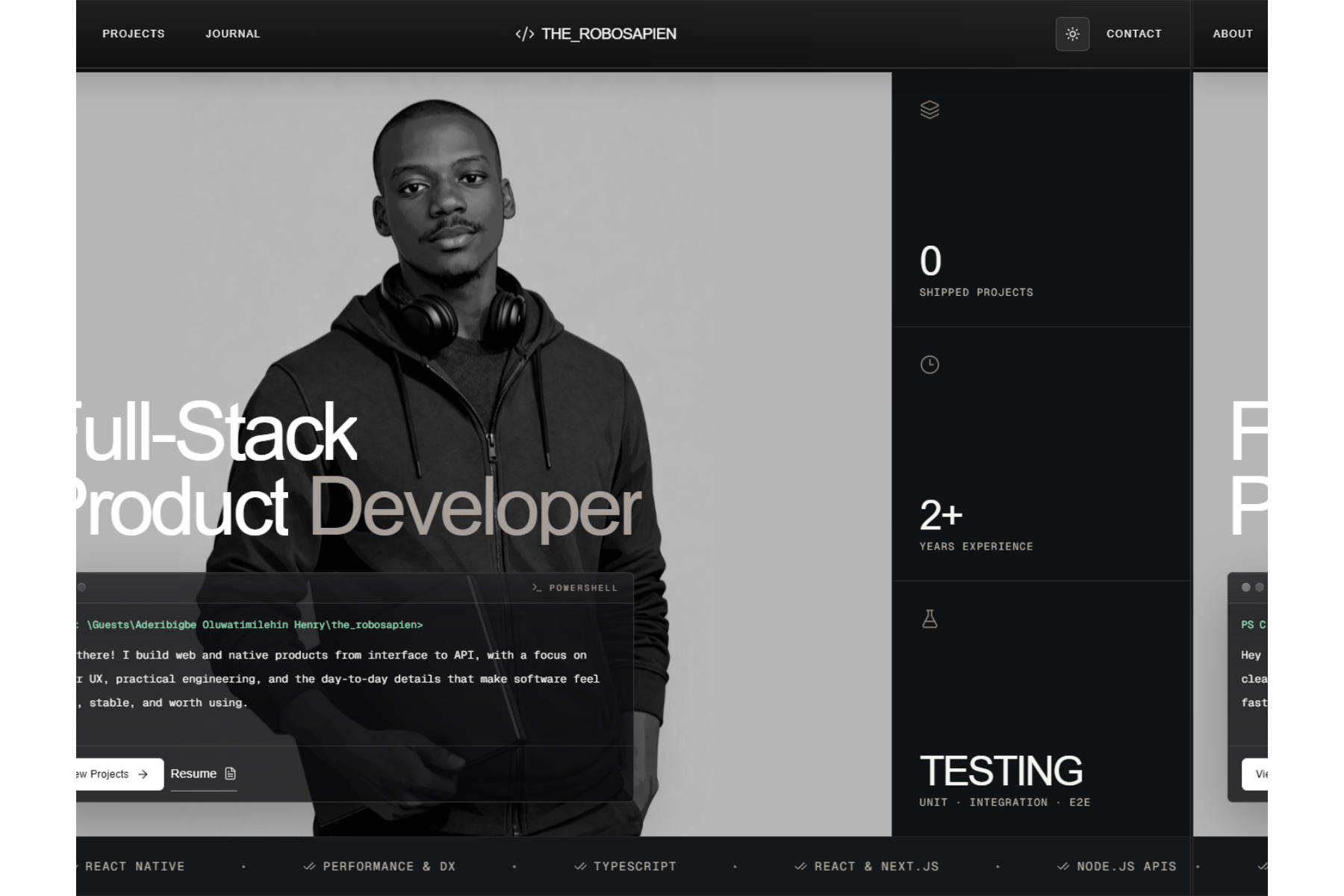
A production-ready portfolio platform that combines a cinematic public website with a structured admin CMS, giving a full-stack engineer a sharper way to present work, publish writing, manage media, and keep every key touchpoint current without relying on constant code edits.
RoleProduct Engineer / Full-Stack Engineer
Duration3 weeks
ClientPersonal Brand / THE ROBOSAPIEN
Year2026
Project Summary
RoboSapien is a two-sided portfolio platform — a premium, editorial experience for recruiters and collaborators, and a secure internal hub for projects, assets, and contact management.
02 / Snapshot
5 Admin Modules
A centralized control center for Projects, Journal, Site, Contact, and Media.
Structured Publishing System
Project metrics, process steps, gallery items, closing cards, and editorial sections are modeled as reusable data instead of being hardcoded into pages.
SEO-Ready Foundation
Metadata, Open Graph, JSON-LD, sitemap, robots, and schema support are built into the publishing flow.
Supabase-Powered Operations
Auth, Postgres, storage, and protected media workflows support the app from content creation through deployment.
03 / Overview
A portfolio platform built to communicate capability
The RoboSapien was designed as a modern portfolio system for a full-stack engineer whose work spans frontend craft, backend architecture, product thinking, and technical storytelling. Instead of treating the portfolio as a static brochure, the product turns its core surfaces into a cohesive publishing engine: projects are structured like case studies, journal entries read like polished editorial pieces, and shared brand surfaces remain easy to control from one unified admin workspace. That product thinking changes the quality of the experience. Recruiters get a clearer view of technical depth, clients see a stronger sense of delivery and execution, and the owner of the platform gets a system that can evolve without friction as new work, new writing, and new assets are added.
Challenge
Most portfolio sites are visually decent at launch but operationally weak over time. New work often requires manual code edits, assets get scattered, case studies become inconsistent, and the backend story is invisible even when the engineering is strong. On the admin side, many portfolios have no real content workflow at all, which makes the site harder to maintain and less credible as a product artifact. The challenge here was to build a platform that delivered both sides well: a premium front-facing experience with strong visual confidence, and a dependable internal system that makes publishing, updating, and scaling content feel deliberate instead of fragile.
Solution
I designed and built a dual-surface product with a clear separation of concerns. The public site focuses on storytelling, credibility, discoverability, and polish. The admin layer focuses on control, structure, and velocity. Projects, articles, media, hero slides, resume assets, and site links are all managed through purpose-built flows backed by Supabase storage and relational content models. That architecture makes the platform materially stronger. The public experience stays elegant and fast, while the operational layer supports real editing, uploads, publishing decisions, and secure access control. In short, the portfolio behaves like a real product because it was engineered like one.
04 / Stack & Scope
What shipped
Tech Stack
Next.jsReact 19TypeScriptTailwind CSSSupabasePostgreSQLApp RouterSentryResendPlaywright
Team Context
Solo end-to-end product definition
Deliverables
- Public landing experience with dynamic hero media, featured projects, and journal highlights
- Searchable and filterable project catalogue with list and grid browsing modes
- Structured project detail pages with metrics, overview, challenge, solution, process, gallery, and closing cards
- Journal publishing system with editorial sections, key takeaways, reading progress, and article metadata
- About and contact pages designed to strengthen professional credibility and conversion
- Resume delivery workflow managed through the admin layer instead of static manual maintenance
- Admin control center for projects, journal, site settings, contact submissions, and reusable media
- Media upload pipeline for images, video, and PDF assets backed by Supabase storage
- SEO layer with metadata generation, schema markup, sitemap, robots, and social sharing support
- Production-minded auth, access gating, and protected admin route handling
Key Highlights
- Turns a personal portfolio into a maintainable product platform instead of a one-off marketing site
- Balances visual polish with operational clarity across both public and admin experiences
- Uses structured content models so case studies and articles stay consistent as the portfolio grows
- Gives non-code content management capabilities without sacrificing engineering control
- Supports richer storytelling through galleries, metrics, process framing, and editorial writing surfaces
- Extends brand management to shared assets like hero slides, social links, about avatar, and resume delivery
- Builds trust with technical reviewers through real system design choices, not surface-level aesthetics alone
- Strengthens discoverability and professionalism through SEO, schema, and deployment-ready infrastructure
05 / Process
From product framing to final polish.
Step 01
Product Framing
Defined the portfolio as a product system rather than a static personal site. That meant clarifying the audience mix, identifying the most important credibility surfaces, and shaping a structure that could support both storytelling and long-term content operations.
Step 02
Content and Data Modeling
Designed the app around structured project and journal records so every case study could be composed from reusable sections instead of fragile freeform content. Metrics, process steps, gallery items, closing cards, and editorial fields were all modeled to support consistency and future scale.
Step 03
Admin and Media Workflows
Built a protected admin workspace for managing projects, journal publishing, site-wide settings, uploads, and contact operations. Media handling, resume delivery, and shared brand assets were treated as first-class workflows so everyday updates could happen cleanly inside the product.
Step 04
Public Polish and Shipping Readiness
Refined the front-facing experience across layout, responsiveness, transitions, metadata, SEO, schema, and route behavior. The final pass focused on making the platform feel deliberate in presentation while remaining dependable in production.
06 / Gallery
Selected product views
07 / Closing Notes
The RoboSapien transforms a personal portfolio into a durable product surface — showcasing shipped projects while demonstrating systems thinking, interface design, content architecture, and real-world product readiness.
Structured Publishing
Case studies and journal entries are built on reusable content architecture, which keeps the platform easier to maintain and far more scalable than a manually assembled portfolio.
Brand Control
Shared surfaces such as resume delivery, social links, avatar, hero media, and project assets are all managed through the product itself, making the site faster to update and more consistent over time.
Production Readiness
From protected admin flows and upload validation to schema markup, deployment support, and end-to-end testing, the platform reflects a shipping mindset rather than a concept-only build.
08 / Next Project